
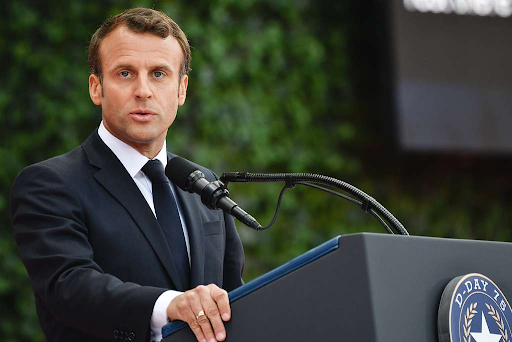
For parents worried about what their children encounter online, political summits can feel remote — full of language about regulatory frameworks and geopolitical competition that seems far removed from the daily reality of managing a child’s relationship with a smartphone. Emmanuel Macron’s speech at the AI Impact Summit in Delhi was different. It was, at its core, a message to parents everywhere: your government sees the problem, knows the evidence and is fighting to do something about it.
The evidence Macron cited would be alarming to any parent. Research by Unicef and Interpol found that 1.2 million children in 11 countries had been victimised by AI-generated sexually explicit deepfakes in a single year. One in 25 children in the worst-affected nations. These are not abstract statistics. They are the images of real children, produced without their knowledge or consent, distributed across platforms that have proved unable or unwilling to remove them. For any parent who has handed a phone to a child, the numbers land with particular force.
Macron’s response was framed in terms parents can recognise. He argued that what is forbidden in the physical world must also be forbidden online — that a child’s legal protection does not end at the threshold of a digital space. He called for platforms and governments to collaborate on making social media and the internet genuinely safe for children, not in theory but in practice. And he announced that France is pursuing legislation to ban social media for children under 15 — an intervention that reflects the government’s assessment that existing protections are insufficient.
The international dimension of his speech was designed to show parents that the effort does not stop at France’s borders. Through the G7 presidency, Macron is pushing for coordinated international standards — acknowledging that digital harm does not respect national boundaries and that protecting children online requires international cooperation, not just national legislation. António Guterres and Narendra Modi gave him important international support, suggesting that the political will for such cooperation exists beyond France.
The message to parents is not that the problem is solved or that government action will be quick or perfect. It is that the problem is recognised, that the evidence is taken seriously and that the most powerful democratic governments are beginning to treat child safety in the AI era as a non-negotiable priority rather than a nice-to-have. For parents worried about their children online, that message from Delhi is at least a beginning.