
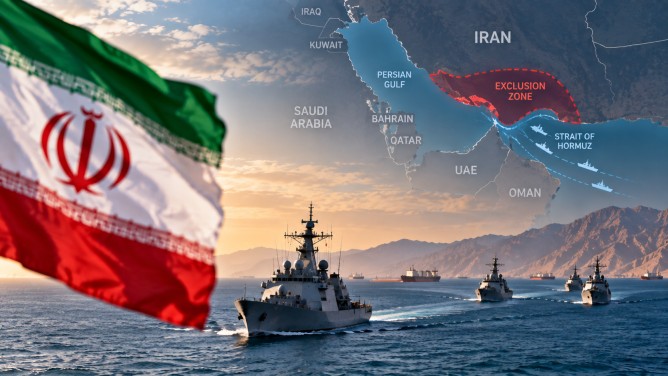
Iran has announced plans to create a new “exclusion zone” around the Strait of Hormuz, a key global shipping route for oil and gas. The zone is intended to target vessels that Iran suspects are trying to navigate through this strategically important waterway. Mohsen Rezaei, now leading Iran’s Supreme National Security Council, specified that the zone would stretch from the U.S. naval blockade area toward the Strait and into the Arabian Gulf. Vessels found entering this zone with the intent of crossing the Strait could face placement on an Iranian sanctions list.
This development arises out of heightened tensions, following a significant escalation in hostilities between the U.S. and Iran. Recently, the U.S. conducted strikes on three Iranian oil tankers after Iran launched ballistic missiles at U.S. warships. Additionally, Iran claimed to have targeted an unmanned U.S. vessel attempting to enter the strait, although this assertion was denied by the U.S. military.
The Strait of Hormuz remains vital for the worldwide oil and gas industry, as it is a major conduit for these resources. Any disruptions in this region have the potential to affect energy prices and have broader implications for the global economy. In response, the United States has intensified naval operations to enforce a blockade of Iranian ports, aiming to prevent Iran from exporting oil. The U.S. has also exerted increased economic pressure following the breakdown of diplomatic talks with Tehran.
Rezaei emphasized Iran’s intention to continue diplomatic efforts, albeit with stronger guarantees in any future agreements. However, discussions between the U.S. and Iran have stalled, with both sides accusing each other of ongoing violations. Despite these diplomatic and military tensions, U.S. officials note that a substantial amount of oil continues to transit through the Strait of Hormuz, supported by naval escorts and alternative regional pipelines.