
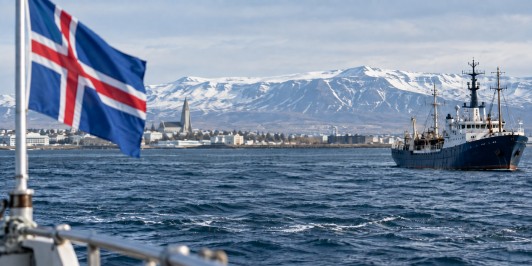
The Icelandic government is planning to introduce legislation that would permanently end commercial whaling within its borders, leaving Japan and Norway as the last countries practicing the controversial industry. The proposal is set to be presented to the parliament in February, aiming to establish a definitive ban after years of heated debate and persistent pressure from animal welfare and conservation advocates.
Historically, Iceland’s whaling activities have predominantly focused on fin whales, a species currently listed as vulnerable. During the annual hunting season, which spans from June to September, the industry has operated under a government-sanctioned quota, capturing dozens of these majestic creatures. The proposed permanent cessation of whaling has garnered significant backing from animal rights organizations, which argue against the practice on ethical, environmental, and conservation grounds.
Commercial whaling in Iceland resumed in 2006, despite the existence of an international moratorium established in 1986 aimed at safeguarding whale populations. Norway reignited its commercial whaling operations in 1993, while Japan made a significant shift in 2019 when it left the International Whaling Commission. This departure allowed Japan to recommence commercial whaling within its territorial waters and exclusive economic zones.
Should Iceland’s legislative proposal succeed, the global landscape of commercial whaling would narrow further, isolating Norway and Japan as its remaining practitioners. It is important to note, however, that the international moratorium does not restrict indigenous communities in specific regions, such as parts of Greenland and Alaska, from engaging in whaling for sustenance, cultural, and traditional purposes.