
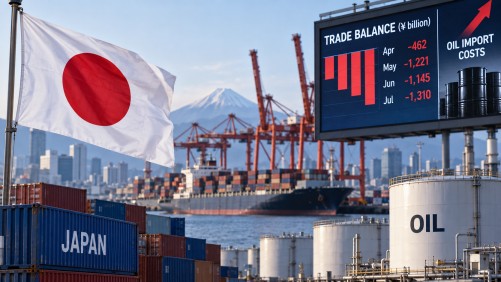
Japan’s economy has been grappling with a persistent trade deficit amid rising energy costs, driven largely by ongoing geopolitical tensions. In August, the nation recorded a trade deficit of approximately 1.1 trillion yen ($7 billion), marking the fourth month in a row of trade shortfalls. This financial strain is primarily attributed to the spike in oil prices, a consequence of disruptions in the Middle East that have influenced global energy markets and shipping routes.
According to preliminary data released by Japan’s Finance Ministry, imports surged by 28% from the previous year, reaching 11.15 trillion yen ($71.9 billion). The increase reflects Japan’s heavy reliance on imported energy, particularly crude oil, which has been impacted by instability around the Strait of Hormuz. This dependency has significantly inflated Japan’s import costs, underscoring the broader economic challenges the country faces.
Despite the rise in imports, Japan also reported a notable increase in exports, which grew by 19.3% year-on-year, totaling 10 trillion yen ($64.5 billion). The export growth was bolstered by strong performance in sectors such as automobiles and computer chips, indicating robust demand for Japanese goods abroad.
Trade with major partners showed varied trends. Exports to the United States experienced a substantial rise of 24.9%, while imports from the US jumped by 55.2%. This reflects a dynamic trade relationship with the US, characterized by significant bilateral exchange. Meanwhile, exports to Europe rose by 11%, and imports from the region increased by 20.4%, highlighting steady trade activity with European countries.
Conversely, Japan’s trade with the Middle East presented a different picture, with exports declining by 5.2% and imports decreasing by 4.2%. This downturn is indicative of the ongoing regional instability affecting trade flows. As Japan navigates these challenges, the broader economic implications of fluctuating energy prices continue to be a central concern for the country’s trade balance.