
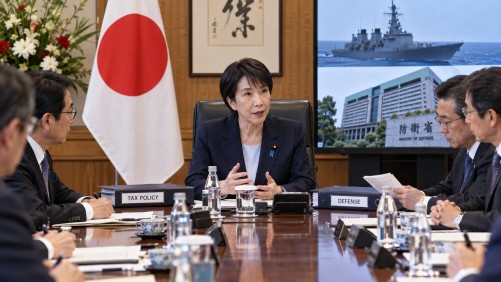
As Japan navigates a complex landscape of economic, diplomatic, and security challenges, Prime Minister Sanae Takaichi’s newly reshuffled Cabinet gears up to address these pressing issues starting next month. Key legislative priorities include the reduction of consumption tax on food items and the introduction of income-linked cash payments, with an extraordinary Diet session anticipated in early October. This session will be pivotal for the ruling coalition of the Liberal Democratic Party and Nippon Ishin, particularly as they lack a majority in the Upper House and require opposition cooperation to pass these measures.
Finance Minister Satsuki Katayama retains her position and is tasked with spearheading the proposed tax and payment reforms. The government is also eyeing significant political reform through the reduction of Lower House seats, a demand strongly advocated by coalition partner Nippon Ishin. These legislative moves highlight the administration’s focus on economic adjustments and political restructuring as central to its agenda.
On the foreign policy front, Japan faces ongoing tensions with China, especially concerning security issues related to Taiwan. Foreign Minister Toshimitsu Motegi and Defense Minister Shinjiro Koizumi, both retained in their roles, will play crucial parts in managing Japan’s relationships with China and the United States, while also advancing the country’s defense strategies. Prime Minister Takaichi is poised to attend the Asia-Pacific Economic Cooperation summit in Shenzhen, China, in November, which could serve as a platform for diplomatic engagement.
Another significant focus for the Japanese government is the revision of its national security documents by year-end, including the National Security Strategy that guides foreign and defense policies. This revision occurs amid discussions on increasing defense spending without imposing further financial burdens on the populace, a balancing act that the Cabinet must carefully navigate.
In addition to these initiatives, Prime Minister Takaichi is advocating for constitutional reform. However, efforts to develop specific amendment proposals have yet to gain substantial momentum. As her administration embarks on these ambitious undertakings, the interplay of domestic reform and international diplomacy will be crucial in shaping Japan’s future trajectory.