
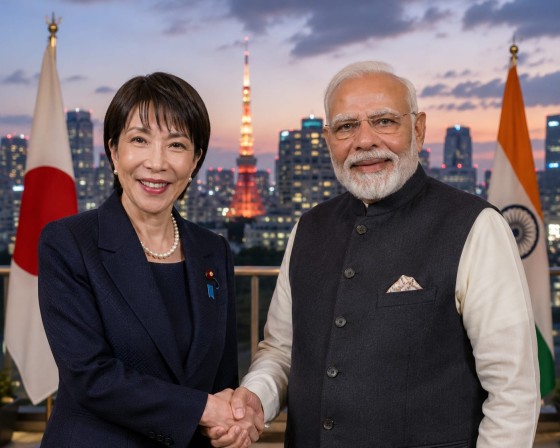
In a significant move to fortify their bilateral ties, Japanese Prime Minister Sanae Takaichi and Indian Prime Minister Narendra Modi convened in New Delhi, setting the stage for enhanced cooperation in security, economic resilience, and advanced technological development. The summit underscored a mutual commitment to maintaining a free and rules-based Indo-Pacific region while addressing concerns about economic coercion and strategic challenges in the East China Sea and South China Sea.
The summit resulted in a decisive agreement to bolster supply chains, with a particular focus on strategic sectors like semiconductors and critical minerals. This partnership aims to mitigate vulnerabilities and ensure a stable supply line amidst global uncertainties. Additionally, both countries are set to expand their defense collaboration through joint military exercises, improved naval vessel maintenance, and the development of defense equipment. A “two-plus-two” meeting involving their foreign and defense ministers is planned for later this year, further solidifying their defense ties.
Economic collaboration took a front seat as Japanese and Indian companies signed 129 memorandums of understanding, paving the way for investments amounting to approximately ¥2 trillion ($12.4 billion). These agreements span across a wide range of sectors, including semiconductors, artificial intelligence, automotive manufacturing, and advanced technologies, highlighting a shared ambition to drive innovation and economic growth.
The leaders also placed a strong emphasis on artificial intelligence, marking it as a key area for future collaboration. As part of this initiative, Japan aims to welcome 500 Indian AI specialists by 2030 to participate in joint research and innovation projects. This move reflects the growing synergy between the two nations in harnessing emerging technologies to address global challenges and foster sustainable development.