
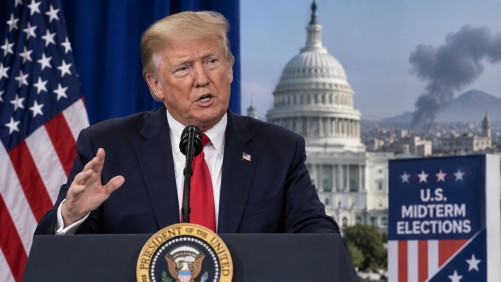
Amid ongoing tensions between the United States and Iran, President Donald Trump has expressed optimism that the conflict could conclude following the US midterm elections in November. In a conversation with reporters in Dublin, Trump speculated that Iran might be extending hostilities to impact the elections but believed the situation could resolve soon after the polls. He also anticipated a significant drop in oil prices once the conflict is settled.
Meanwhile, Iranian President Masoud Pezeshkian reiterated Tehran’s stance against war, emphasizing that peace is Iran’s foremost priority. During a speech at the BRICS Summit in New Delhi, Pezeshkian stressed the importance of regional countries ensuring security, rather than relying on US involvement. His remarks underscored Iran’s desire for a peaceful resolution and regional autonomy in managing security affairs.
The conflict has significantly affected global energy markets, with tensions around the strategically critical Strait of Hormuz leading to a surge in oil prices, which recently surpassed $100 per barrel. This price increase highlights the broader impact of the geopolitical strife on international energy supply chains and market stability.
Efforts to broker a settlement have yet to yield substantial progress, as lower-intensity skirmishes persist. The ongoing uncertainty surrounding the conflict continues to cast a shadow over regional security prospects and the stability of global energy resources, raising international concerns.