
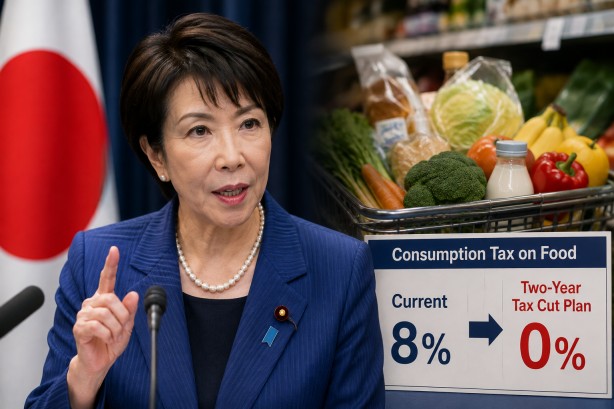
Japanese Prime Minister Sanae Takaichi has put forward a plan to temporarily slash the consumption tax on food items, effectively bringing it down to zero for a span of two years. The initiative is designed to alleviate the financial burden on households with middle to low income. Under the proposed scheme, the food tax rate would drop from its current 8% to 1% starting in April 2027, with supplemental income-linked benefits addressing the remaining tax liability. Takaichi has assured the public that this tax reduction is strictly temporary and will conclude after the designated two-year period.
The proposal is set to be presented to the Cabinet for approval next week, with hopes of securing legislative passage later in the year. Despite these ambitions, the plan has met with substantial opposition within the ruling Liberal Democratic Party (LDP). Critics within the party have voiced concerns over the initiative’s projected cost of ¥10 trillion ($62.25 billion) and have questioned the absence of a definitive funding strategy to support it.
Furthermore, fiscal conservatives are apprehensive about the feasibility of reinstating the original tax rate once the temporary measure comes to an end. They argue that the implementation of such a significant tax cut could result in lasting implications for Japan’s fiscal health if the original rate cannot be restored as planned.
Takaichi’s tax proposal aims to address the rising cost of living, which has been a pressing issue for many Japanese citizens. By targeting food costs, the measure seeks to provide immediate relief to those most affected by economic pressures. However, the challenge remains in balancing the short-term benefits with long-term fiscal responsibility, a topic that continues to generate debate among policymakers.
As the proposal advances through the governmental approval process, the outcome will depend on how effectively Takaichi can navigate the political landscape and address the concerns of her party colleagues, ensuring that both the economic and social objectives of the plan are met. The coming weeks will be crucial in determining the fate of this ambitious tax cut strategy.