
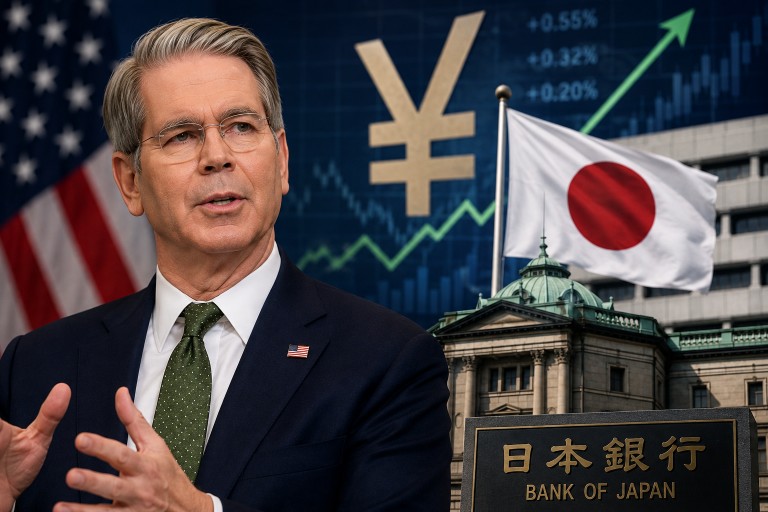
During a recent gathering of G20 finance ministers and central bank governors in Asheville, North Carolina, U.S. Treasury Secretary Scott Bessent expressed robust support for Japan’s initiatives aimed at fortifying the yen. His backing is seen as reinforcing market expectations that the Bank of Japan (BOJ) may opt to raise interest rates at its imminent policy meeting on September 17-18. Bessent’s discussion with BOJ Governor Kazuo Ueda highlighted the challenges yen weakness poses, notably its contribution to inflationary pressures. He underscored the necessity of sound monetary policy and effective communication to stabilize inflation expectations and mitigate excessive currency fluctuations.
Anticipation is mounting in financial markets over the possibility of another interest rate hike by the BOJ, following a previous increase in June. Should the BOJ decide on a rate hike in September, it could signal a shift toward a more accelerated pace of monetary tightening. Japan’s rising interest rates have already begun to impact borrowing costs, with the yield on the country’s benchmark 10-year government bond recently surpassing 3% for the first time since 1996. This rise reflects expectations of a tightening monetary policy and concerns over Japan’s fiscal health.
The increase in bond yields is also leading to a higher debt-servicing burden for the Japanese government. According to estimates from the Finance Ministry, interest payments could significantly rise in the coming years if borrowing costs do not decline. This scenario presents a complex situation for the government as it navigates the potential economic repercussions.
For Japanese households, the impact of rising interest rates is most evident in the form of higher mortgage costs, especially affecting those with fixed-rate loans. However, the hike in rates is not without its benefits; savers and financial institutions are experiencing improved returns on deposits and long-term investments. This dual impact of increased costs and benefits highlights the challenges faced by the BOJ in balancing its monetary policy objectives.
The BOJ’s task remains challenging as it strives to support the yen and manage inflation levels while trying to avoid placing undue strain on households, businesses, and government finances. The central bank’s decisions in the coming policy meeting will be closely watched, as they hold significant implications for Japan’s economic trajectory and fiscal stability.