
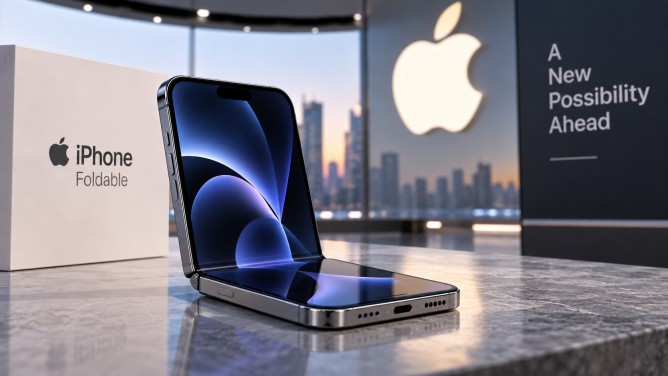
Apple is on the brink of making a significant impact in the foldable smartphone market with its anticipated launch of a foldable iPhone. This strategic move is seen by analysts as a potential catalyst for revitalizing a market segment that has recently faced a downturn. The first half of 2026 saw an 8% drop in global foldable smartphone shipments compared to the previous year. However, experts predict a rebound in the latter half, projecting total shipments for the year to hit approximately 23 million units, with continued growth expected through 2027.
Market analysts are optimistic about Apple’s potential to capture a significant portion of the foldable smartphone market shortly after its debut. Smart Analytics Global suggests that Apple could secure 25% of global foldable shipments by the close of 2026, with projections suggesting this figure could rise to 41% in 2027. Despite this optimism, Apple may encounter initial supply chain constraints due to the complexities involved in manufacturing foldable devices. Additionally, the expected price of over $2,000 for the new iPhone could limit its initial availability and consumer uptake, with a possible phased rollout in select markets before a broader global release.
Industry observers, including the research firm IDC, anticipate that Apple’s entry could transform foldables into one of the most rapidly expanding segments within the smartphone industry. IDC forecasts Apple to ship over 17 million foldable iPhones by 2027, capturing around 40% of the global foldable market. Overall, the foldable smartphone market is projected to reach 22.9 million units in 2026, marking a 12.6% increase, with further growth expected to bring the total to approximately 27 million units in 2027, an 18% increase.
Apple’s foray into foldables is likely to alter the competitive dynamics, posing a formidable challenge to established manufacturers like Samsung, Huawei, Vivo, and Xiaomi. Preliminary reports indicate that Apple’s first foldable iPhone could feature a 5.5-inch cover display and a 7.8-inch foldable main screen. Additionally, it is expected to incorporate advanced technologies such as Touch ID, an A20 Pro chip utilizing a 2-nanometer process, and dual 48-megapixel cameras.
Should Apple successfully navigate manufacturing hurdles and its high price point, its entry into the foldable space could provide a significant boost to the category, rapidly establishing Apple as a dominant player. The anticipated launch has the potential to not only invigorate the foldable smartphone market but also redefine the landscape of mobile technology.