
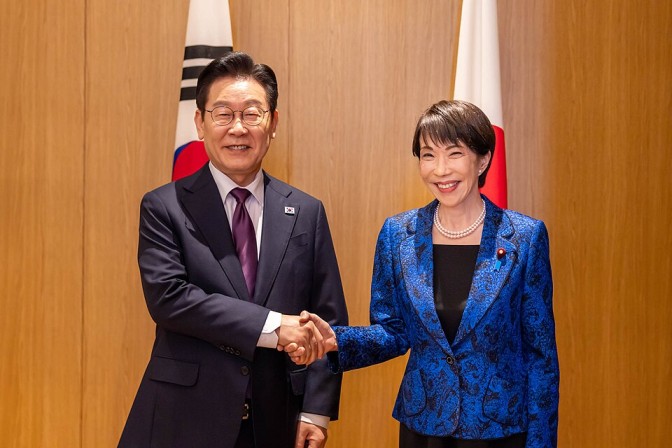
In a significant diplomatic meeting, Japanese Prime Minister Sanae Takaichi and South Korean President Lee Jae Myung convened in Andong, South Korea. The leaders focused on enhancing collaboration in energy security, defense, and regional stability, particularly against the backdrop of escalating tensions in the Middle East. This meeting, a notable part of Takaichi’s inaugural visit to South Korea since assuming office, also marked the third dialogue between the two heads of state. These interactions are part of a series of reciprocal exchanges aimed at strengthening ties between the neighboring nations.
In light of increasing global uncertainties, both leaders underscored the necessity of fortified cooperation. Prime Minister Takaichi articulated Japan’s commitment to maintaining stability in the Indo-Pacific region, a critical area for both nations. Meanwhile, President Lee Jae Myung highlighted the crucial role of dialogue and cooperation among allied countries in navigating these turbulent times. Their discussions were expected to culminate in a joint statement emphasizing energy security and economic coordination, reflecting the shared challenges both countries face due to their reliance on Middle Eastern oil imports. These imports have been jeopardized by recent disruptions in the Strait of Hormuz, a vital shipping route.
The dialogue between Takaichi and Lee included strategic plans for public-private partnerships to ensure petroleum supply stability. Additionally, they discussed the establishment of a new policy dialogue framework, which would bring together trade and industry officials from both nations. Such initiatives indicate a proactive approach to mitigate the risks associated with energy dependence and enhance economic resilience.
This summit occurred in the wake of recent high-level discussions between the United States and China, highlighting the strategic importance of Japan and South Korea in the broader regional security landscape. Both nations reviewed security challenges and explored avenues for trilateral cooperation with Washington. The meetings underscore the importance of a united front among allied nations in addressing regional and global security concerns.