
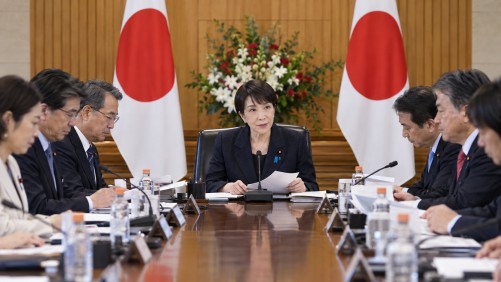
In a move that signals a potential shift in political dynamics, Japanese Prime Minister Sanae Takaichi has enacted her second Cabinet reshuffle, stepping away from the traditional factional influences within the ruling Liberal Democratic Party (LDP). This reshuffle, announced on September 17, highlights Takaichi’s hands-on approach, as she personally assessed the preferences of party lawmakers through submitted questionnaires to determine their desired government roles.
While maintaining stability by retaining most senior ministers, Takaichi introduced significant changes by appointing new ministers who had explicitly requested their positions. Notably, Hiroshi Nakatsuka of Nippon Ishin, a junior coalition partner, was appointed as the party’s first Cabinet minister, marking a notable inclusion that could impact coalition dynamics.
The reshuffle retained key figures such as Chief Cabinet Secretary Minoru Kihara, Finance Minister Satsuki Katayama, Defense Minister Shinjiro Koizumi, and Foreign Minister Toshimitsu Motegi, ensuring continuity in crucial government functions. However, the appointments of Kazuo Yana and Yoshihiro Seki as agriculture and education ministers, respectively, drew attention due to their previous implications in a political funding scandal. This has led opposition parties to call for further scrutiny and explanations regarding their past conduct.
Among the newly appointed ministers, Hisayuki Fujii’s role as internal affairs minister stands out, as he acknowledged Takaichi’s detailed consideration of his policy priorities. Similarly, Goshi Hosono, now the reconstruction minister, has been tasked with disaster management responsibilities, including preparations for a projected Disaster Management Agency.
The reshuffled Cabinet faces pressing legislative challenges, with key issues including a proposed temporary reduction in the consumption tax on food and deliberations on a bill concerning the number of Lower House seats. These legislative priorities will test the new Cabinet’s effectiveness and Takaichi’s strategic decisions in shaping Japan’s political landscape.