
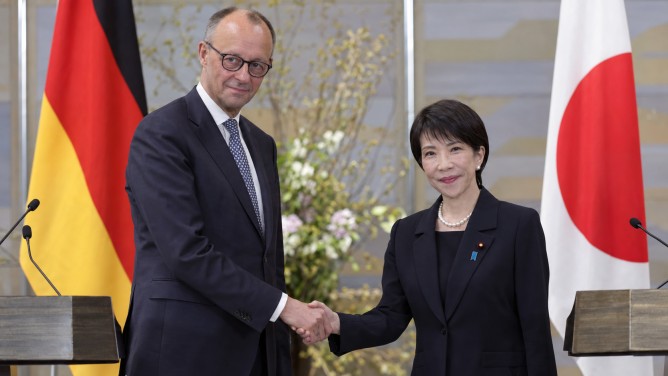
Japan is expressing concerns over the potential implications of Germany joining the Global Combat Air Programme (GCAP), a collaborative effort with Britain and Italy to develop a next-generation fighter jet by 2035. This apprehension was sparked by German Chancellor Friedrich Merz’s recent discussions with Japanese Prime Minister Sanae Takaichi in Tokyo on October 28, where he expressed interest in exploring cooperative opportunities in fighter aircraft development between the two nations.
The GCAP is an ambitious defense initiative aimed at advancing military aviation technology. However, Japan fears that Germany’s involvement could introduce delays due to necessary changes in the established division of responsibilities among the current partners. A source from the Japanese Defence Ministry indicated that Germany’s entry might necessitate renegotiating the current work-sharing arrangements agreed upon by Japan, Britain, and Italy.
Britain, on the other hand, appears to see potential benefits in Germany’s participation. It is reportedly interested in having Germany on board to help share the development costs and possibly lower the unit price of the aircraft by expanding the number of potential orders. This perspective highlights the financial advantages of widening the partnership, despite the possible complications in the project’s timeline.
To address these concerns, Japan plans to engage in discussions with both Britain and Italy to evaluate the scope of Germany’s possible cooperation. One proposed solution is for Germany to take part as an observer, allowing it to stay informed and consider purchasing the aircraft without directly impacting the development timetable.
As these discussions unfold, the main challenge remains balancing the potential benefits of Germany’s involvement against the risks of disrupting the project’s progress. Japan’s decision will likely hinge on whether the advantages of cost-sharing and expanded orders outweigh the complexities of altering existing agreements and timelines.