
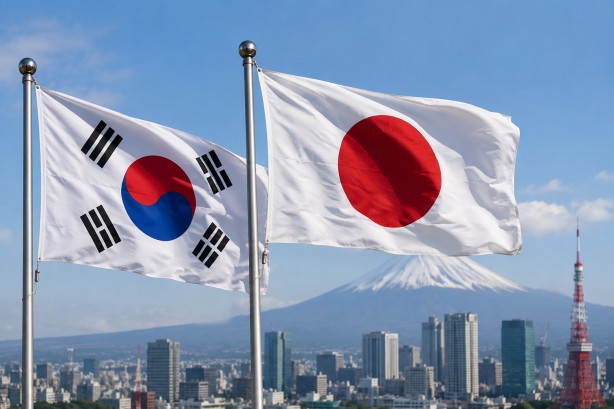
Under the leadership of Prime Minister Sanae Takaichi, Japan is taking a more conservative political path, which is presenting new difficulties in its relationship with South Korea. There are rising concerns that historical and territorial disagreements could jeopardize the diplomatic progress recently achieved between the two nations. Traditionally, South Korea and Japan have adopted a “two-track” strategy, which separates contentious historical issues from areas that demand closer collaboration, such as security and economic matters. However, a report by South Korea’s Institute for National Security Strategy has highlighted that political instability coupled with Japan’s shift towards the right might hinder advancements in bilateral relations.
The tensions have been exacerbated by recent visits from Japanese politicians to the contentious Yasukuni Shrine, along with Japan’s renewed assertion of sovereignty over Dokdo. This territory, under South Korean control, is referred to as Takeshima by Japan. While Prime Minister Takaichi refrained from visiting the shrine on the anniversary of Japan’s World War II surrender on August 15, she did send a ritual offering. This act, followed by visits from several senior Japanese officials, provoked formal objections from South Korea.
South Korean President Lee Jae Myung is approaching the situation with caution. He acknowledges the historical grievances but also stresses the growing importance of maintaining cooperation with Japan. Despite his measured stance, experts caution that without tangible progress and expanded practical cooperation, the ongoing disputes over historical matters, territorial claims, and wartime controversies could jeopardize the effectiveness of the “two-track” strategy.
The delicate balance of diplomacy between South Korea and Japan remains under threat as historical and territorial disputes resurface, challenging the efforts made in recent years. The ability of both nations to navigate these issues while maintaining necessary collaboration in security and economic fields will be crucial for the stability of their bilateral relations. Experts emphasize the need for both countries to find a way forward that ensures progress and strengthens cooperative ties amidst rising political challenges.