
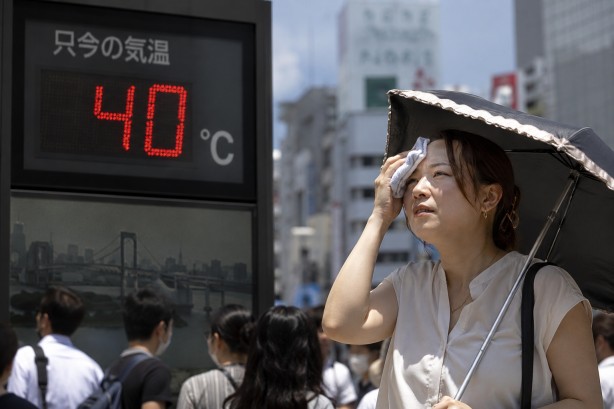
On July 21, Japan faced an intense heatwave as a powerful high-pressure system caused temperatures to soar above 40°C in several regions, marking the ninth year in a row that such extreme heat has been documented. This rise in temperature is the first of its kind since the term “kokushobi,” or “cruelly hot days,” was introduced in April to describe days when temperatures reach 40°C or higher.
The city of Tajimi in Gifu Prefecture recorded the highest temperature of the day, hitting a scorching 40.3°C, while nearby Gujo saw the mercury rise to 40°C. Over in Aichi Prefecture, the city of Toyota experienced temperatures climbing to 40.1°C, underscoring the widespread impact of the heatwave.
By the middle of the afternoon, temperatures at 255 of Japan’s 914 weather observation stations had reached at least 35°C. This widespread heatwave affected both the eastern and western parts of the country, illustrating the severity of the current weather conditions.
In light of these conditions, the Environment Ministry, along with national meteorological authorities, issued heatstroke alerts for 42 prefectures, marking the highest number of such warnings issued this year. Residents were advised to take precautions against the heat by using air conditioning, staying well-hydrated, and maintaining adequate salt intake to prevent heat-related illnesses.