
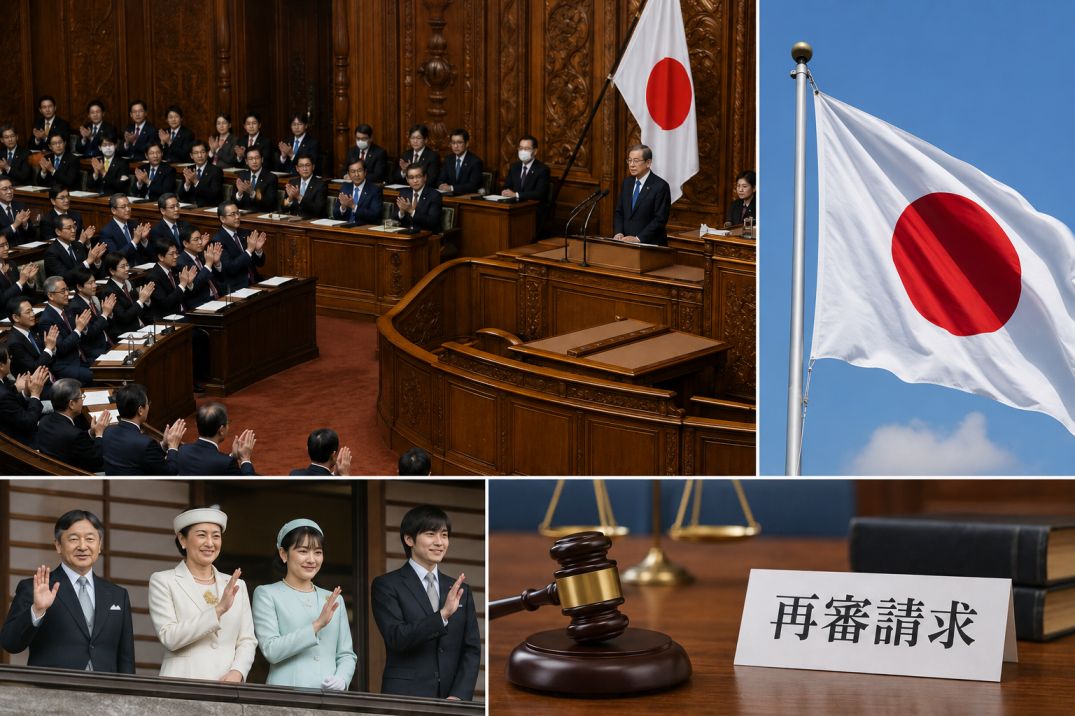
Japan’s legislative body has enacted a trio of significant laws, marking a pivotal change in the country’s legal landscape. Among these is the first major amendment to the Imperial House Law since 1947. The adjustment to this law enables female members of the imperial family to maintain their royal status post-marriage and allows for the adoption of male descendants from former imperial branches, thereby bolstering the imperial succession framework.
This legislative session also witnessed the introduction of a law that criminalizes the public desecration of Japan’s national flag. Under this new mandate, individuals found guilty of such acts could face penalties including up to two years of imprisonment or a fine amounting to 200,000 yen. Advocates of the legislation argue that it serves to protect national symbols, while detractors express concerns over potential implications on freedom of expression.
Apart from these, reforms aimed at expediting the criminal retrial process were also approved by the parliament. These changes are intended to minimize delays in the re-examination of wrongful conviction cases. Nonetheless, the measure drew criticism from several opposition factions, who contended that the reforms fall short of ensuring adequate transparency and comprehensive evidence disclosure.
The revision of the Imperial House Law is a monumental step, as it addresses longstanding concerns regarding the sustainability of the imperial lineage. By allowing women to retain their status and welcoming male heirs from past branches, the law seeks to secure the continuity of the imperial family amidst evolving socio-cultural dynamics.
While the flag desecration law has sparked a debate over its potential impact on civil liberties, the reforms to the criminal retrial procedures highlight an ongoing effort to refine Japan’s judicial processes. Despite opposition criticism, these legislative developments represent a concerted effort by Japan’s parliament to address both cultural and judicial issues within the nation.