
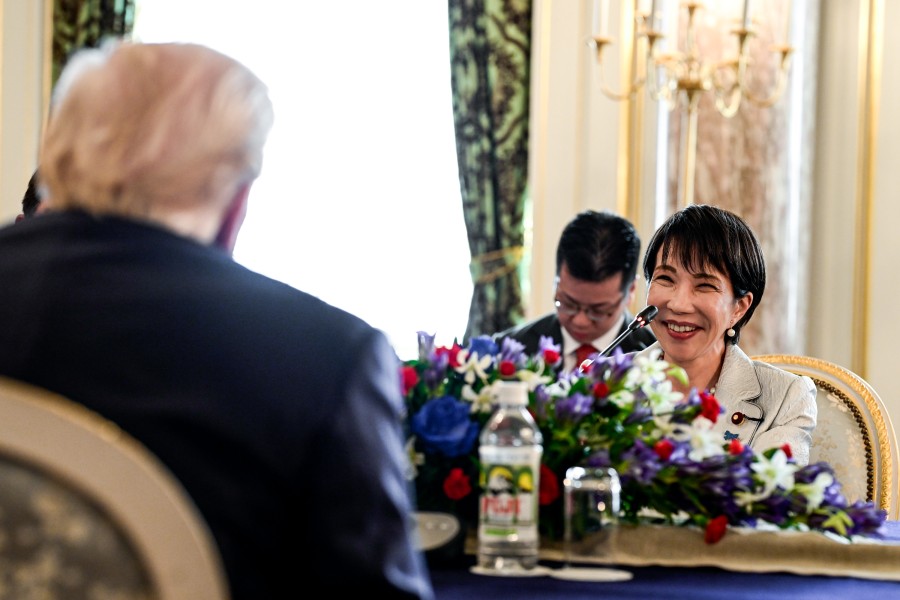
At the G7 summit, Japanese Prime Minister Sanae Takaichi made a notable debut by emphasizing Japan’s role as a dependable ally and leveraging international diplomacy to further its strategic goals. Japan chose an approach centered around consensus-building and backing collective global initiatives instead of dominating the public discourse. Major topics on the agenda included the conflicts in Ukraine and the Middle East, security in the Indo-Pacific region, the resilience of supply chains, and critical mineral resources.
The Japanese delegation highlighted the interconnectedness of European events with Asian security issues, focusing on regional stability and maritime security concerns. The summit concluded with joint statements underscoring support for Ukraine, efforts to enhance economic security, and a commitment to maintaining a free and open Indo-Pacific, aligning with Japan’s strategic interests.
In the lead-up to the G7 discussions, Takaichi engaged in bilateral talks with leaders from the United Kingdom and Italy. These meetings underscored collaboration on defense initiatives and cutting-edge technology projects, reflecting Japan’s commitment to strengthening ties with European nations amidst broader geopolitical challenges.
Observers have pointed out that Japan’s impact at the summit was achieved through subtle diplomacy and forming alliances, as opposed to seeking a spotlight role. This consistent and pragmatic strategy has solidified Japan’s position as a reliable partner in the G7, especially during times of growing international uncertainty.